Scoped credentials
Your personal assistant never sees your work keys.
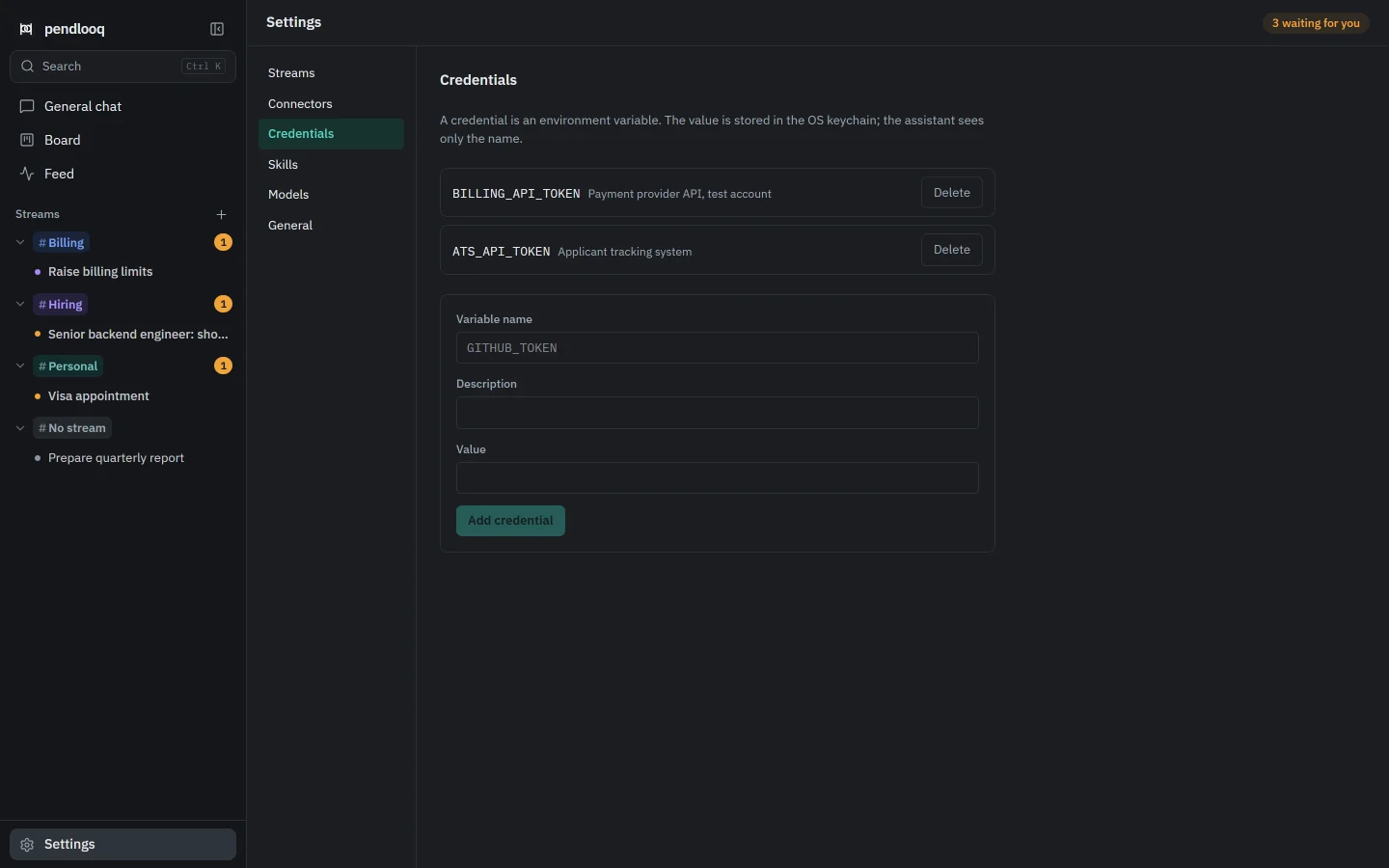
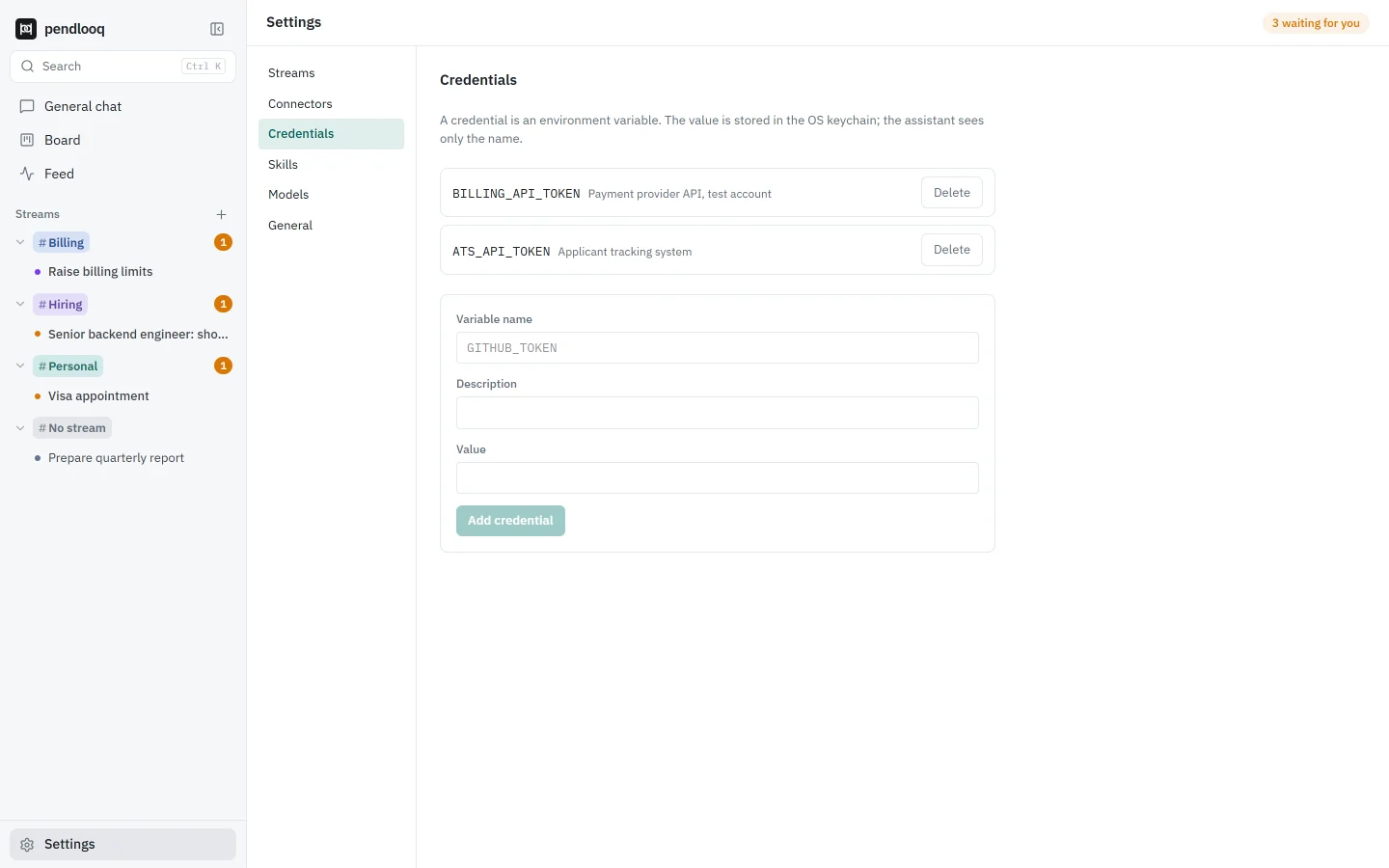
In pendlooq a credential is a named secret, such as BILLING_API_TOKEN, stored in your operating system’s keychain and granted to specific streams. When the agent runs a command in that stream, the value is passed as an environment variable; the model only ever sees the name, and the value is cut out of command output.
Updated
How it works
01
Add a credential once
Settings → Credentials: a variable name, a description, and the value. The value goes straight to the OS keychain.
02
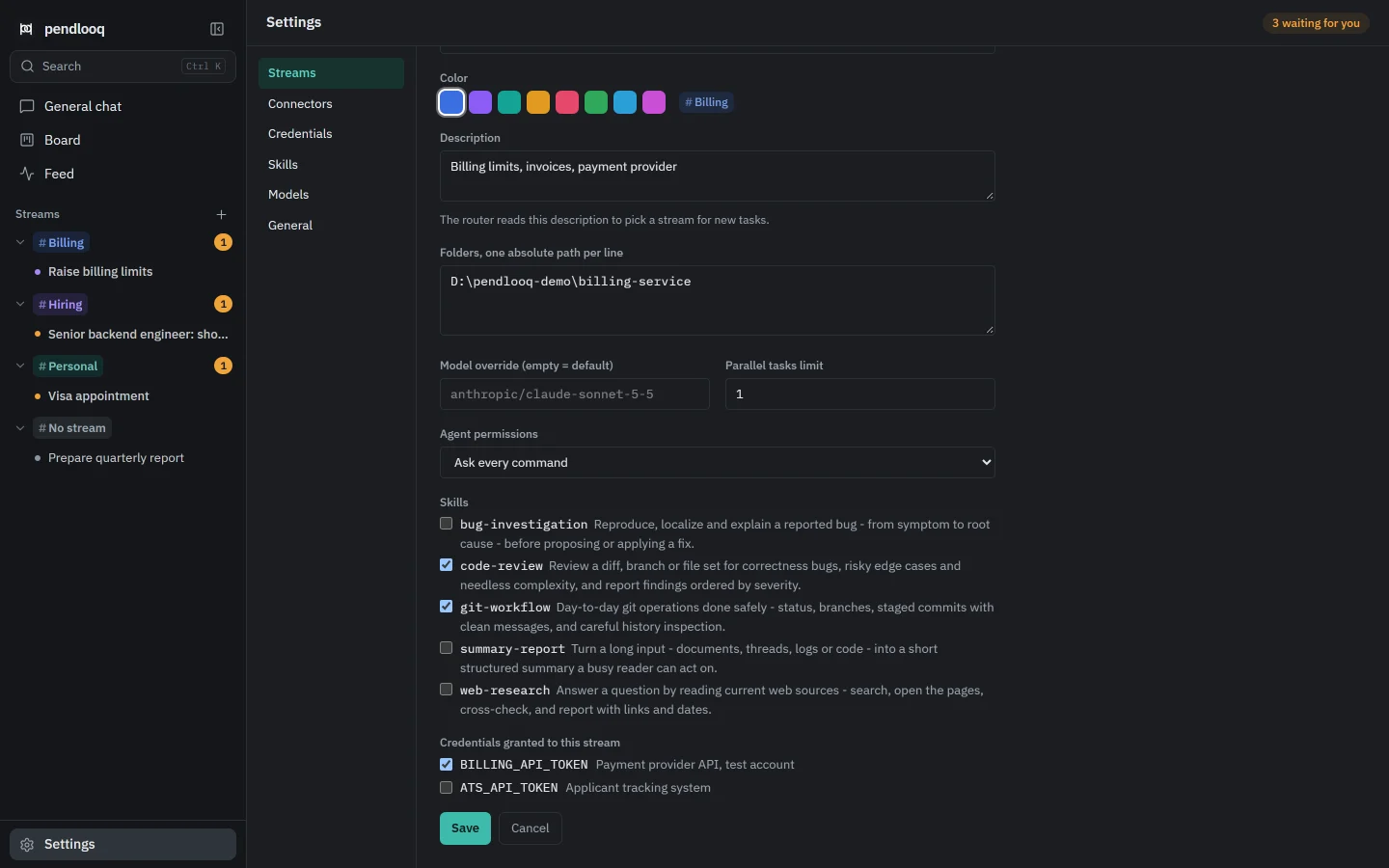
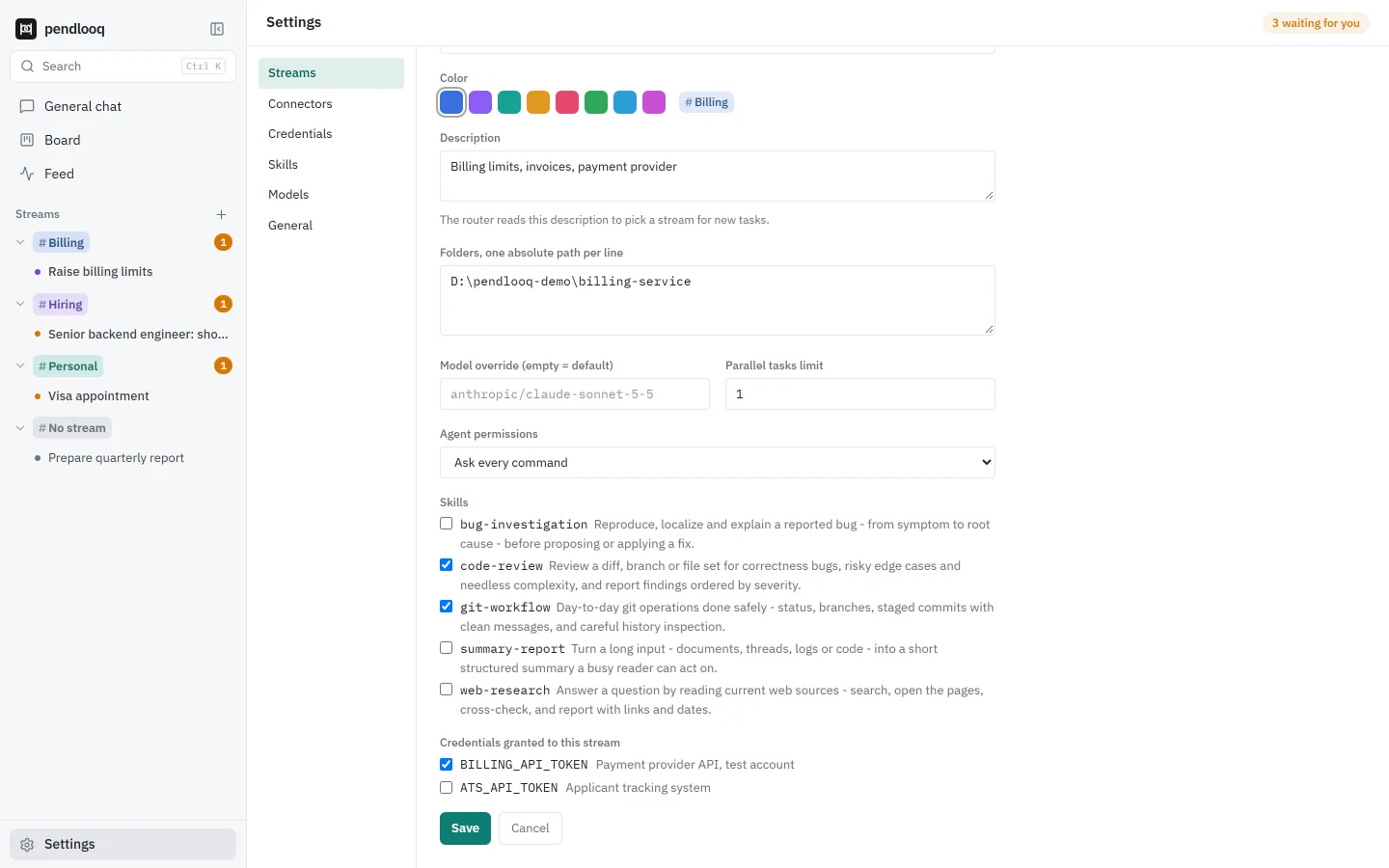
Grant it to a stream
In the stream settings, check the credentials that line of work needs. Other streams do not get them.
03
The agent uses it by name
Commands in that stream run with the credential as an environment variable. The model refers to BILLING_API_TOKEN by name and never sees what is behind it.
04
Values stay out of the chat
If a command prints a credential value, it is removed from the output before it reaches the model or the database.
How it differs from Claude Desktop and ChatGPT
- Claude Desktop
- Claude Desktop connects to services through connectors and MCP servers that you add to the app.
- ChatGPT
- ChatGPT connects to services through apps and, on some plans, custom MCP servers.
- pendlooq
- pendlooq adds a separate layer for your own secrets: environment-variable credentials in the OS keychain, granted per stream, with values hidden from the model.
Facts about other products checked on 14 November 2026. Full comparisons
Questions
Where exactly are the values stored?
In the operating system’s keychain (Keychain on macOS, Credential Manager on Windows, Secret Service on Linux), not in the pendlooq database.
Does the model provider see my credentials?
No. The model sees credential names. Values are injected into the command environment on your machine and removed from command output.
Are model API keys stored the same way?
Yes, model keys for Anthropic, OpenAI and OpenRouter are also kept in the OS keychain and never leave your machine.
What about the cloud?
Coming with the cloud: the runner stays on your machine or server with your keys and credentials; the cloud stores only names and which streams may use them.
Related
- StreamsEach line of work gets its own folders, skills and keys.Related features
- Jira, Notion and Google DriveYour assistant works in Jira, Notion and Google Drive, with the access you allow.Related features
- Independent developerAn independent developer with client work and personal projects, kept apartSee it in a working day
- CredentialDefinitions and setup in the docs.Documentation